Mutual funds with high risk are also known as equity funds. They invest primarily in stocks and equity-related instruments. These funds carry a higher risk of losing value but also offer the potential for higher returns compared to other investment options, making them suitable for investors with a high-risk tolerance and long-term investment horizons.
How Do Mutual Funds with High-Risk Work?
High return mutual funds pool money from multiple investors to create a diversified portfolio of stocks and equity-related securities. Professional fund managers make investment decisions for your profit, helping you make investment decisions in a mutual fund with the highest return. The performance of these funds depends on the market conditions and the performance of the underlying assets.
Types of Mutual Funds with High Risk
Investing in these mutual funds can potentially offer higher returns, but it's crucial to understand the types that carry greater risk. Here are some high risk funds-
Large Cap Funds: They invest in well-established companies with a large market capitalization, typically over ₹10,000 crores. These companies are usually industry leaders and have a stable growth history, but the returns can vary based on market conditions.
Mid Cap Funds: These funds target medium-sized companies with a market capitalization between ₹4,000 crores and ₹10,000 crores. They offer a balance between growth and stability but can be more volatile than large-cap funds due to market fluctuations.
Small Cap Funds: Investing in small companies with a market capitalization of less than ₹4,000 crores, these funds have the potential for high returns, but they come with a significant risk due to the unpredictable nature of smaller enterprises.
Sectoral Funds: These funds focus on specific sectors such as technology, healthcare, or infrastructure. While they can offer high returns during sector booms, they also carry the risk of significant losses if the sector underperforms.
Thematic Funds: Investing based on themes or trends, such as green energy or digital transformation, these funds can yield substantial returns if the theme performs well. However, they are highly sensitive to changes in market trends and economic conditions.
Advantages of Investing in High Return Mutual Funds
These mutual funds can be highly rewarding, offering significant advantages for investors willing to accept the associated risks. So, if you are looking to invest in them, here are some benefits of doing so-
Potential for High Fund Returns: These equity mutual funds have the potential to deliver substantial returns over the long term due to their exposure to high-growth stocks. This makes them the best choice among high return mutual funds.
Diversification: By spreading investments across a range of sectors and market capitalizations, these funds reduce the impact of a poor-performing stock or sector on the overall portfolio. This strategy can help provide more stable and balanced returns over time, mitigating some of the risks inherent in individual investments.
Capital Appreciation: High risk funds focus on opportunities for significant growth by investing in stocks with strong potential for price increases. By targeting emerging trends and market opportunities, these funds aim to achieve substantial capital appreciation, although this comes with a higher level of risk.
Liquidity: These mutual funds offer the advantage of liquidity, meaning investors can easily buy and sell their shares. This feature is particularly useful for those who might need to access their funds quickly to manage short-term financial needs or to take advantage of other investment opportunities without significant delays.
Who Should Invest in the Best High Risk Mutual Funds?
These mutual funds can be rewarding, but they aren't for everyone. Here’s a more detailed look at who should invest in them.
High Risk Tolerance: These funds are best suited for investors who are comfortable with the idea of potentially losing money in the short term in exchange for higher long-term returns.
Long-term Investment Horizon: Ideal for those who plan to invest their money for an extended period, typically 5 years or more. This long horizon allows the investment to recover from any short-term market dips.
Wealth Building Goals: Perfect for individuals aiming to build significant wealth over time.
Young Investors: Younger individuals often have a longer time horizon and can afford to take on more risk.
Risks Associated with the High Returns Mutual Funds
These funds come with several risks, including market volatility, economic downturns, and sector-specific risks. The value of investments can fluctuate significantly, and there is a possibility of losing the principal amount invested. Hence, investors should be prepared for potential short-term losses and have a long-term perspective.
Limitations of Investing in these Mutual Funds
Investing in these funds can be challenging for risk-averse investors. They require a high level of market knowledge and the ability to stay invested during market downturns. Additionally, the potential for high returns comes with the risk of significant losses, making them unsuitable for conservative investors.
FAQ’s
Should I invest in these funds?
Investing in mutual funds with high risk depends on your risk tolerance and investment goals. It also depends on expense ratio and financial goals. If you are comfortable with market volatility and have a long-term perspective, they can be a good option.
What is very high-risk in SIP?
Very high risk in SIP refers to investing in funds that have a high level of volatility and potential for significant short-term losses. They are typically equity-oriented, and they invest in mutual funds of small-cap or sectoral stocks.
Can mutual funds be risky?
Yes, mutual funds can be risky, especially those that invest in equities. The value of investments can fluctuate based on market conditions, and there is a potential for losing the principal amount invested.
Can I withdraw from a mutual fund scheme anytime?
You can withdraw from mutual funds, but it depends on the type of fund and the lock-in period. Equity funds generally allow withdrawals, but some funds may have a lock-in period or exit load.
Are these mutual funds tax-free?
Mutual funds are subject to taxation. Equity funds are taxed at 15% on short-term capital gains and 10% on long-term capital gains above ₹1 lakh per financial year. Debt funds are taxed at 20% with indexation benefits.
Can I sell my SIP anytime?
You can stop your SIP (Systematic Investment Plan) anytime, but the existing investments will continue until the lock-in period ends or until you decide to sell the units.
The following SSFB savings accounts are linked to your mobile number +91 **********. Choose one to proceed with linking it to Torus.
Thank you for choosingtorus digital’s3-in-1 Account!
Banking
Demat
Wealth
Banking
By proceeding, I acknowledge that I have read and agreed to the Terms & Conditiions.
I hereby consent to Torus Digital and its affiliate companies obtaining my personal identifiable information as provided to SSFB Ltd. during the process of opening my savings account.
Powered by
It appears you already have an existing savings account with SSFB.
Please proceed to link your active SSFB account with Torus Digital.
By proceeding, I acknowledge that I have read and agreed to the Terms & Conditiions.
I hereby consent to Torus Digital and its affiliate companies obtaining my personal identifiable information as provided to SSFB Ltd. during the process of opening my savings account.
Congratulations,
Your Digital savings bank account opening journey is complete.
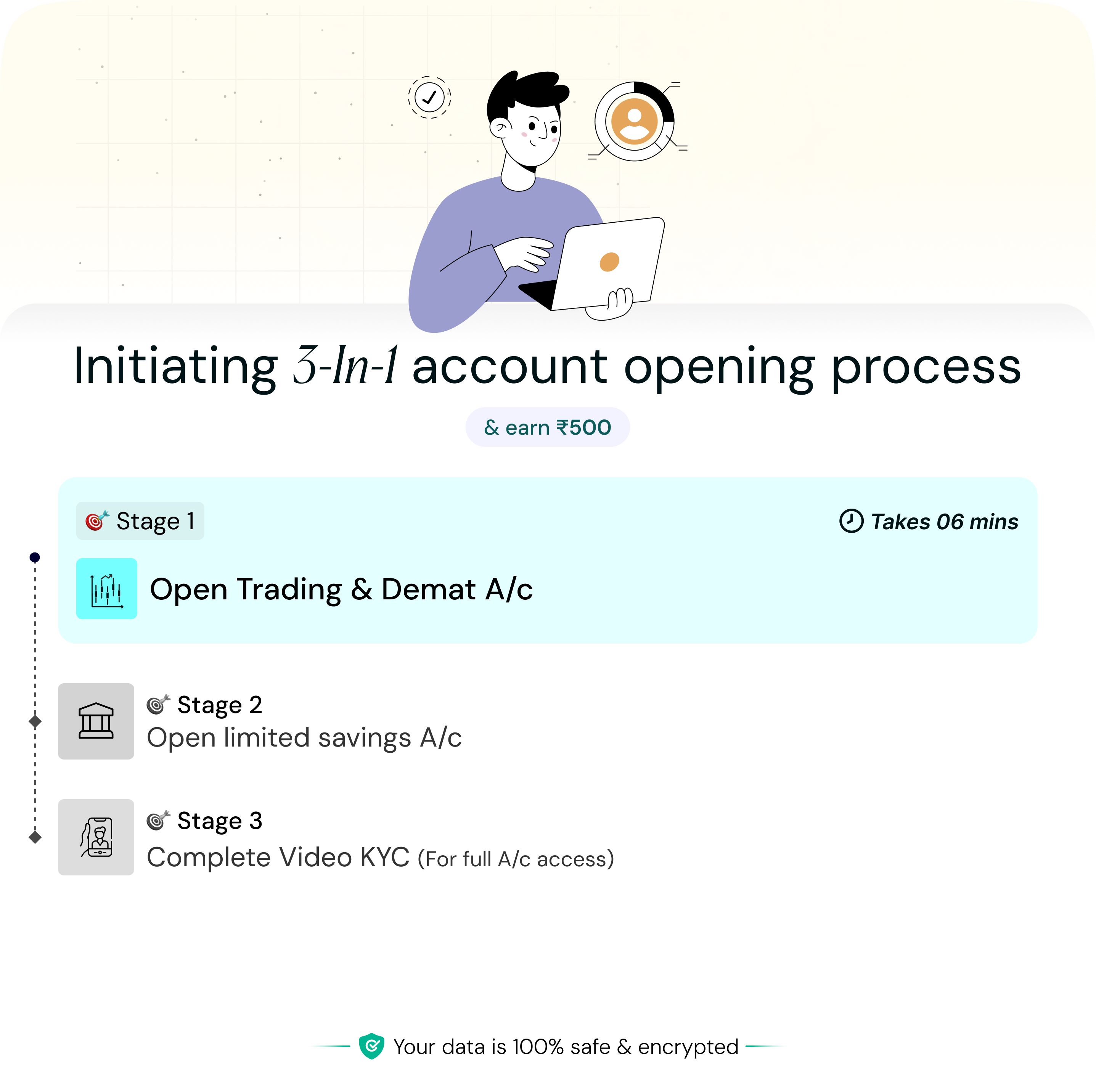
We’ll now redirect you to the trading and demat account opening journey.
Redirecting...
* Disclaimer: Torus Financial Markets Pvt. Ltd. is the authorized broking partner of Torus Digital Pvt Ltd, responsible for the opening of trading and demat accounts and the execution of trades.